
5 Connectivity Mistakes GPS Companies Make and How to Avoid Them
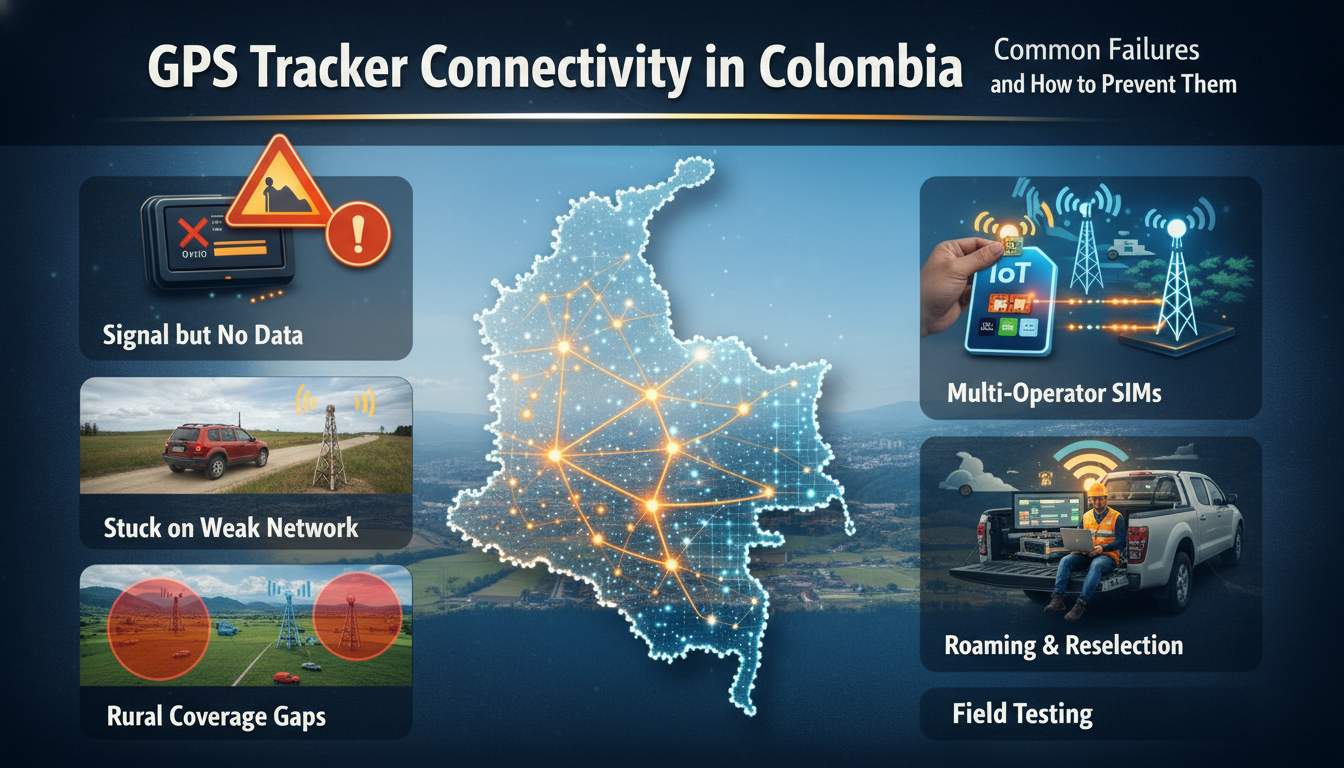
For GPS companies, connectivity is everything.
No matter how advanced a tracker's hardware or platform is, its value depends on one factor: the ability to transmit accurate, real-time data.
Yet, across Latin America, many GPS and telematics providers struggle with dropped signals, inconsistent data, and device downtime, often because of avoidable connectivity mistakes.
Here are the top five, and how to fix them.
Why Connectivity Defines GPS Performance
Every GPS tracker relies on stable connectivity to send location updates, alerts, and telemetry data. Without it, tracking becomes unreliable, and customers lose trust.
In regions like Latin America, where network coverage varies widely, the choice of connectivity provider can make or break your product.
Mistake 1: Relying on a Single Mobile Operator
Many GPS companies choose a SIM card from one operator and deploy it across all devices. It seems simple, but it's a critical mistake.
In Latin America, coverage quality varies dramatically between regions, and even within the same city. If your SIM depends on one operator, devices can go offline whenever that network weakens.
Talk to a connectivity expert
From multioperador global coverage to a single management platform, we keep your devices connected everywhere.
Get in touchHow to Avoid It
Use multi-operator IoT SIMs that automatically connect to the strongest available signal. This ensures continuous operation across countries and reduces downtime caused by coverage gaps.
Mistake 2: Using Consumer SIM Cards Instead of IoT SIMs
Consumer SIMs (the same used in phones) aren't built for 24/7 device operation. They can expire, disconnect after inactivity, or block data connections designed for IoT.
GPS devices need stable, low-data, machine-to-machine (M2M) connections, not human-centric plans.
How to Avoid It
Switch to IoT SIMs with dedicated M2M profiles and data plans optimized for low, consistent usage. They offer remote management, private APNs, and better reliability for long-term deployments.
Mistake 3: Ignoring Cross-Border Roaming Needs
Latin America's logistics sector operates across borders, trucks traveling from Mexico to Guatemala, or fleets moving between Colombia and Ecuador.
If your SIMs don't support regional roaming, devices may lose connectivity at borders or incur unexpected roaming charges.
How to Avoid It
Choose IoT connectivity that includes roaming agreements for all major Latin American markets. A single regional SIM profile simplifies management and ensures your trackers stay online wherever they travel.
Check our coverage map to see all supported countries and networks.
Mistake 4: Not Monitoring SIM and Data Usage
Many GPS companies install SIMs and forget about them, until something breaks.
Without active monitoring, issues like overconsumption, inactive SIMs, or disconnected devices can go unnoticed for weeks.
How to Avoid It
Use an IoT management platform that allows you to track data usage, connection status, and SIM health in real time. Proactive monitoring helps detect anomalies before they impact customers.
Mistake 5: Overlooking Security and Private Networks
Sending GPS data over public networks can expose sensitive information to interception or misuse.
For fleet management or security applications, this creates serious risks.
How to Avoid It
Implement private APNs, VPN tunnels, or fixed IPs to secure communication between GPS devices and your servers. Security isn't just compliance, it's key to protecting your customers' trust.
Learn more about our secure connectivity solutions.
Moabits' Perspective: From Frustration to Reliability
At Moabits, we've seen how addressing these five issues transforms GPS operations across Latin America.
Companies that switch to multi-network IoT SIMs, adopt proactive monitoring, and secure their data channels not only improve reliability, they also scale faster and reduce customer complaints.
Connectivity shouldn't be an obstacle; it should be a competitive advantage.
Want to learn more about improving IoT connectivity for GPS trackers in Latin America? Follow our weekly insights on IoT, tracking, and connectivity.
Related articles
- How much does it really cost to operate an IoT fleet in LATAM and how to optimize the spend?
- What are the main security risks in connected IoT devices and how to mitigate them?
- From Sensor to Decision: How IoT Is Moving Beyond Telemetry Into Real Automation
- The 2G/3G Shutdown Has Arrived: What Is Happening to IoT Devices in Colombia
About Moabits
Founded in Spain in 2020, Moabits simplifies global IoT connectivity for companies that build, deploy, or resell connected solutions.
Through global SIM and eSIM coverage, smart automation, and our powerful platform Orion, we make managing connected devices seamless, so you can focus on scaling your business.
From service providers and MVNOs to OEMs and IoT solution developers, Moabits delivers the flexibility, visibility, and control needed to launch, manage, and grow smarter connectivity ecosystems worldwide.
Our Mission
Moabits empowers businesses to successfully deliver high quality connectivity services by providing a complete suite of solutions.

Our Vision
To provide technology to help connect the world, fostering global collaboration, enhancing efficiency, and improving the quality of life for all.

Let us look at your connectivity together
Whether you are scaling a fleet, deploying meters or launching a new IoT product, our team helps you choose the right coverage, plan and platform setup. Talk directly to the engineers and account managers who will run your project.
Get in touch